
Dual Motor Linear Vibrating Screen Synchronization Guide: Principles, Fine-Tuning Methods, and Real-World Troubleshooting Insights
In industries such as mining, aggregate processing, metallurgy, and bulk material handling, production efficiency is often determined by the stability of screening systems rather than their nominal capacity. Among various screening technologies, the dual motor linear vibrating screen has earned widespread adoption due to its robust structure, high throughput, and relatively low lifecycle cost.
However, in practical plant operations, experienced engineers increasingly recognize a critical fact: the real performance gap between vibrating screens is not defined by steel thickness or brand name, but by the synchronization accuracy of the dual vibration motors.
Dual Motor Linear Vibrating Screen Synchronization Guide
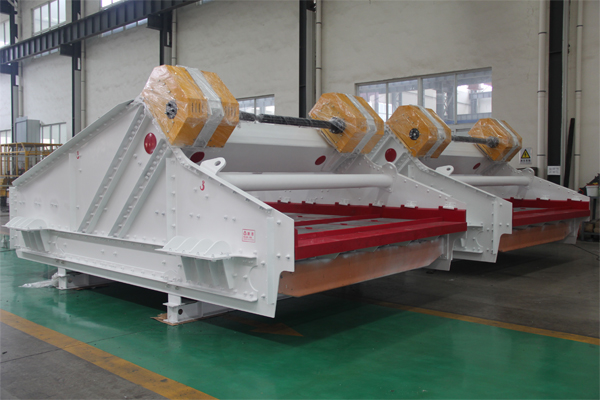
This guide goes beyond basic theory to provide a comprehensive, experience-driven explanation of synchronization mechanisms, installation best practices, precise adjustment methods, and field-proven troubleshooting strategies. Whether you are commissioning new equipment or optimizing an existing production line, understanding these details can directly translate into higher screening efficiency, reduced downtime, and longer equipment service life.
1. Why Motor Synchronization Determines Screening Performance
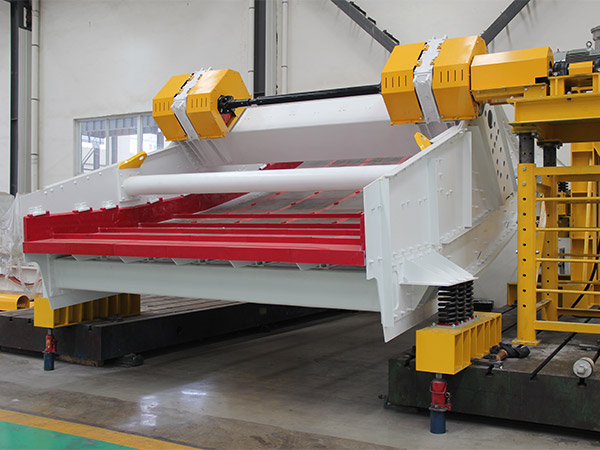
A dual motor linear vibrating screen operates using two vibration motors installed symmetrically on the screen body. Each motor generates centrifugal force through rotating eccentric blocks. When properly configured, the two motors rotate in opposite directions at identical speeds, causing lateral forces to cancel out while longitudinal forces combine to form a stable linear motion.
In theory, this sounds straightforward. In reality, even minor deviations can significantly impact performance.
When synchronization is compromised, operators typically encounter:
Irregular material flow and poor stratification
Uneven amplitude distribution across the screen surface
Noticeable increase in mechanical noise and vibration instability
Accelerated wear of bearings and structural components
Reduced screening accuracy and inconsistent product size
For industries that rely on precise particle classification—such as sand production, mineral processing, or coal preparation—these issues can quickly escalate into production losses and quality complaints. Synchronization is not just a technical parameter; it is the foundation of stable operation.
2. Understanding the Self-Synchronization Mechanism
One of the most overlooked aspects of dual motor systems is that most designs do not rely on mechanical coupling devices. Instead, synchronization is achieved through a physical phenomenon known as self-synchronization.
When two independent motors are mounted on a shared rigid structure, they interact through vibration feedback. Under ideal conditions, the system naturally stabilizes into a synchronized state, with both motors maintaining a consistent phase difference and rotating in opposite directions.
This phenomenon is highly efficient but also highly sensitive.
For reliable self-synchronization, several conditions must be strictly met:
Both motors must have identical specifications (power, speed, excitation force)
Eccentric block settings must be perfectly matched
Installation must be symmetrical along the machine centerline
The screen structure must provide sufficient rigidity for vibration transmission
If any of these conditions are compromised—even slightly—the system may fail to maintain stable synchronization, leading to erratic motion patterns.
3. Installation Practices That Directly Impact Synchronization
In real-world applications, synchronization problems are often traced back to installation errors rather than motor defects. Proper installation is therefore not optional—it is critical.
Accurate Motor Pairing
Using motors from different manufacturers, or even different production batches, can introduce subtle speed variations. While these differences may seem negligible, they can disrupt synchronization over time. Always ensure both motors are identical in every specification.
Symmetrical Positioning
Motors must be installed symmetrically on both sides of the screen body. Any deviation from the centerline will create uneven force distribution. Additionally, rotation direction must be strictly opposite—this should always be verified during wiring and commissioning.
Structural Rigidity and Frame Integrity
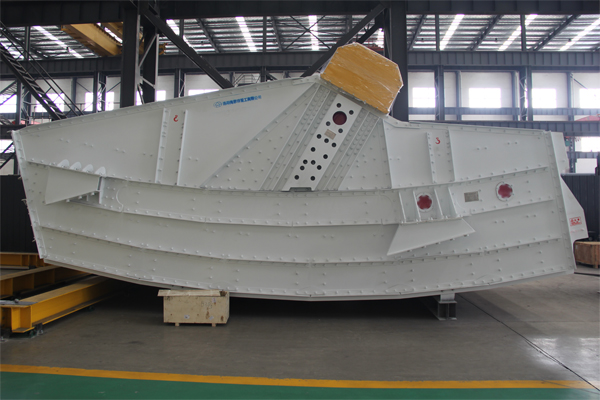
The vibrating screen body acts as the medium through which synchronization occurs. If the structure lacks rigidity, energy transfer between motors becomes unstable. High-quality welding, reinforced side plates, and uniform stress distribution are essential for maintaining synchronization.
Eccentric Block Consistency
The excitation force generated by each motor depends on the angle of its eccentric blocks. Even a small mismatch can result in amplitude imbalance. Adjustment must be performed with precision, and both motors must be calibrated identically.
4. Practical Synchronization Adjustment Procedure
Commissioning a dual motor linear vibrating screen requires more than simply powering it on. A structured approach ensures accurate synchronization from the start.
Recommended procedure:
Verify electrical connections and confirm opposite rotation directions
Adjust eccentric blocks to the required excitation force (ensure both sides match exactly)
Start the machine under no-load conditions
Observe the motion trajectory of the screen body
Measure amplitude at multiple points across the deck
Gradually introduce material and monitor flow behavior
A properly synchronized system will exhibit a consistent linear motion, with uniform material distribution across the screen.
If the motion appears elliptical or circular, this is a clear indication that synchronization has not been achieved. In such cases, immediate reinspection of motor direction and eccentric settings is required.
5. Common Synchronization Issues and Field-Tested Solutions
Even after correct installation, long-term operation can introduce variables that affect synchronization. Below are some of the most common issues encountered in industrial environments.
Uneven Amplitude Distribution
Cause: Mismatched eccentric block angles or unstable power supply
Solution: Recalibrate both motors and verify voltage consistency
Abnormal Noise and Vibration
Cause: Loose bolts, structural fatigue, or frame deformation
Solution: Retighten all fasteners and inspect critical weld areas
Material Bias or Accumulation on One Side
Cause: Asymmetrical installation or phase shift between motors
Solution: Recheck alignment and ensure structural symmetry
Bearing Overheating
Cause: Continuous operation under unstable synchronization conditions
Solution: Inspect synchronization status and ensure balanced excitation force
Preventive maintenance is essential. Regular monitoring of vibration amplitude, motor temperature, and structural integrity can identify issues before they escalate into major failures.
6. Operational Strategies for Long-Term Stability
Maintaining synchronization is not a one-time task—it requires consistent operational discipline.
Experienced plant operators typically follow these best practices:
Conduct routine amplitude measurements to detect early imbalance
Ensure stable and consistent power supply conditions
Avoid frequent start-stop cycles that disrupt synchronization stability
Maintain even material feeding across the screen width
Perform scheduled torque checks on all critical bolts
In high-load environments such as mining and coal handling, these practices can significantly reduce maintenance costs and improve overall equipment reliability.
7. Why Manufacturer Expertise Matters More Than Price
While synchronization is governed by physical principles, achieving it consistently in industrial conditions depends heavily on manufacturing quality.
A reliable vibrating screen manufacturer will:
Perform precise motor matching and testing before delivery
Ensure tight machining tolerances and structural balance
Apply high-standard welding processes to maintain rigidity
Conduct full-load testing to validate synchronization performance
Focusing solely on initial purchase cost often leads to higher long-term expenses due to downtime, repairs, and inefficiency. In contrast, well-engineered equipment delivers stable operation and predictable performance over time.
Conclusion: Synchronization Is the Core of Reliable Screening
Dual motor synchronization is not just a commissioning step—it is the core mechanism that determines how effectively a vibrating screen performs under real operating conditions.
From motor selection and installation accuracy to fine-tuning and ongoing maintenance, every detail contributes to achieving stable linear motion and consistent screening results.
For companies aiming to improve production efficiency, reduce downtime, and enhance product quality, mastering synchronization principles provides a clear competitive advantage.
If you are planning to upgrade your screening equipment or optimize an existing system, working with an experienced engineering team can help you identify the right configuration and avoid costly trial-and-error.
Contact us today for customized technical solutions and expert guidance tailored to your material characteristics and production requirements.