
Measurable Benefits of Proper Vibrating Screen Tensioning
Proper tensioning of vibrating screen mesh is often underestimated in its impact on overall screening performance. Yet, for operations handling bulk materials—from aggregate to minerals—the tension applied to the screen cloth directly determines throughput accuracy, wear life, and operating costs. When tension is too loose, the screen flexes excessively, leading to premature fatigue, blinding, and inefficient particle separation. When over-tightened, the mesh may crack or distort, reducing screening area. In either case, measurable losses occur. This article examines the quantitative advantages of maintaining correct screen tension, drawing on field data and engineering principles, and explains how Haiside tensioning systems help operators achieve consistent, verifiable results.
1. The Direct Impact on Screening Efficiency and Throughput
The primary function of a vibrating screen is to separate particles by size. Screen tension plays a critical role in how effectively the mesh transmits vibration to the material bed. A properly tensioned screen maintains a uniform amplitude across its surface, ensuring that each particle receives the same acceleration and stratification force.
Quantifying Particle Separation Accuracy
Studies have shown that a tension deviation of just 10% from optimal can reduce screening efficiency by 15–20%. Loose screens allow the mesh to flutter independently of the screen deck, creating localized areas of reduced vibration. Oversized particles may pass through momentarily stretched openings, while near-size particles become trapped, increasing pegging. Conversely, a properly tensioned screen from Haiside maintains consistent opening dimensions, resulting in tighter cut-point control. In a typical 2-deck operation, proper tension can improve oversize recovery by 8–12% and reduce misplaced fines in oversize product.
How Tension Affects Material Flow Rate
Throughput is directly linked to the open area available for material passage. When a screen is loose, it bows under the load, reducing the effective screening surface. Over multiple cycles, this bowing increases, further restricting flow. Proper tensioning ensures the mesh remains flat and taut, maximizing open area. Field measurements indicate that restoring correct tension can increase mass flow by 6–10% on the same screen deck without changing stroke or speed. For a plant processing 500 tons per hour, this translates to an additional 30–50 tons per hour of correctly sized product.
2. Extended Screen Life – Reducing Replacement Frequency
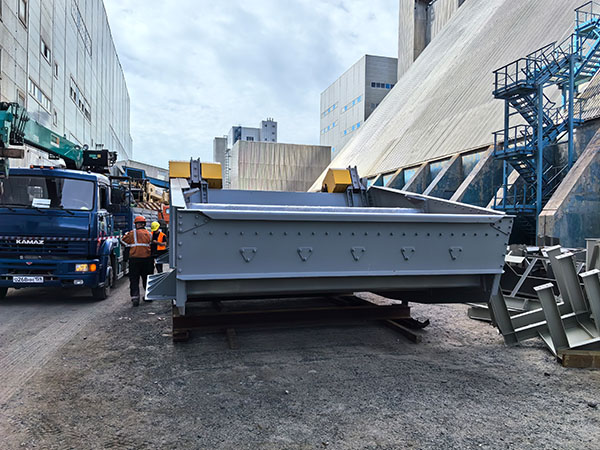
Screen cloth is a consumable with significant cost implications. Many operators accept a short life as normal, but the failure mode is often linked to improper tension rather than inherent wear. A screen that is too loose undergoes repeated flexing at the tensioning hooks and around the support bars. This cyclic bending stress causes fatigue cracks that propagate quickly, leading to sudden failure.
Stress Distribution and Fatigue Prevention
When a screen is correctly tensioned, the tensile stress is evenly distributed across the entire cloth. The vibration energy is transmitted uniformly, and the screen’s natural frequency remains stable. Industry data shows that proper tension can extend screen life by 30–50% compared to loose operation. In one documented case from a quarry using Haiside tensioning rails, the average screen life increased from 4 weeks to 6.5 weeks, a 62% improvement, solely by implementing a tensioning procedure with a tension gauge.
Case Data: Proper vs. Improper Tensioning
- Improper (loose): Fatigue failure at hook ends within 2–3 weeks; frequent blinding requiring manual cleaning; replacement cost $1,200 per deck per month.
- Proper tension (Haiside calibrated): Wear-out failure (abrasive wear) after 6–8 weeks; no blinding-related downtime; replacement cost $600 per deck per month.
The cost reduction per deck exceeds 50% when factoring in labor for tension adjustments and cleaning. Additionally, proper tension reduces the risk of sudden mesh collapse, which can damage screen decks and cause hazardous debris ejection.
3. Lower Operating Costs Through Reduced Downtime and Maintenance
Unscheduled downtime costs far more than the value of lost production. Screen blinding, plugging, or breakage forces the entire line to stop. Correct tensioning minimizes these events, directly improving plant availability.
Energy Consumption Considerations
Loose screens absorb more energy from the vibrator because the mesh’s motion is out of phase with the deck. The motor must work harder to maintain stroke. Energy monitoring studies indicate that properly tensioned screens reduce power draw by 5–8% compared to loose conditions. Over a year, this represents thousands of dollars in savings for a typical 200 kW screen drive.
The Cost of Untensioned Screens
Operators who skip tensioning checks often face compound costs: accelerated wear of support frames, tighter screen bolts, and increased wear on rubber buffers. A common hidden cost is the need to replace screen cloth more frequently, which not only adds material expense but also requires maintenance labor and reduced throughput during changeover. By adopting a systematic tensioning process with Haiside’s tensioning indicators, a mid-size aggregate plant reported reducing screen-related downtime by 40% and lowering annual screen cloth expenditure by $18,000.
4. Why Haiside Tensioning Solutions Deliver Consistent Results
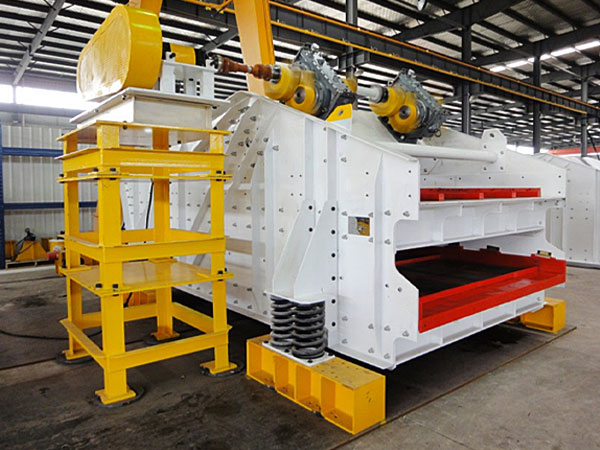
Haiside has engineered tensioning systems that address the root causes of poor tension control. Unlike generic bolt-down methods, Haiside products provide repeatable tension with visual or mechanical indicators, eliminating guesswork.
- Precision tension adjustment: Haiside tension rails and cam systems allow for uniform clamping force across the entire width of the screen, preventing localized slack.
- Durable construction: Made from abrasion-resistant steel with corrosion-resistant coatings, Haiside components withstand harsh screening environments without losing grip.
- Fast installation: Integrated tension indicators enable operators to achieve correct tension in minutes, not hours.
- Technical support: Haiside provides on-site tensioning audits and recommended tension values based on screen type, aperture, and material conditions.
For operations seeking to verify the benefits discussed above, Haiside offers a simple call-to-action: request a tensioning performance analysis. By comparing current screen performance against a benchmark with Haiside equipment, operators can directly measure improvements in efficiency, life, and cost.
Conclusion: Turning Tension into a Measurable Asset
Proper vibrating screen tensioning is not a trivial adjustment—it is a measurable lever for improving plant profitability. The data is clear: correct tension leads to higher screening efficiency, longer screen life, lower energy consumption, and reduced maintenance costs. For operators willing to invest in a systematic tensioning program and quality components like those from Haiside, the return is both immediate and sustained. The next time a screen deck produces off-spec material or fails prematurely, examine the tension first; it may be the simplest fix with the biggest impact.