
Selecting Dust Enclosures and Safety Guards for Vibrating Screens
Selecting the right dust enclosures and safety guards for vibrating screens is a critical decision that directly impacts operational efficiency, worker safety, and regulatory compliance. In mining, aggregate, and bulk material handling industries, vibrating screens are exposed to aggressive dust, flying debris, and moving parts that can pose serious hazards. Without proper protection, dust emissions lead to environmental penalties and health risks, while missing safety guards increase the likelihood of severe injuries. This article provides a systematic framework for choosing enclosures and guards, covering materials, design considerations, compliance standards, and supplier evaluation. Haiside, a trusted manufacturer with over a decade of engineering experience, offers insights to help you make a confident selection.
Why Dust Enclosures and Safety Guards Are Non‑Negotiable
Vibrating screens generate substantial airborne dust during material separation. Uncontrolled dust not only violates emission limits in many jurisdictions but also accelerates wear on bearings, springs, and screen decks. Enclosures contain these particles, reducing maintenance costs and improving air quality. Simultaneously, safety guards prevent operators from contacting pinch points, rotating eccentrics, or flying fragments caused by screen breakage. Integrating both elements from the selection stage avoids costly retrofits and downtime.
Key Criteria for Selecting Dust Enclosures
Material and Construction
Enclosures must withstand constant vibration, impact from oversize material, and corrosive environments. Common materials include:
- Carbon steel with epoxy coating – cost‑effective for dry, non‑corrosive applications.
- Stainless steel (304/316) – required for wet screening, chemical exposure, or food‑grade processes.
- Polyurethane or rubber linings – reduce noise and abrasion on internal surfaces.
The enclosure should be modular for easy access during screen deck replacement. Haiside designs enclosures with bolted panel sections and quick‑release latches, minimizing maintenance downtime.
Sealing Efficiency
A good enclosure uses continuous rubber sealing strips at all joints and around inspection doors. Negative pressure systems with filtration are recommended for extremely fine dust (below 10 microns). Evaluate the sealing performance by measuring fugitive dust levels in comparable installations.
Vibration Isolation
Enclosures must not transmit vibration to the structure or interfere with screen motion. Flexible connectors (rubber bellows or fabric sleeves) should be used at inlet and outlet transitions. Haiside incorporates tuned vibration isolators between the enclosure and support frame to prevent resonance.
Essential Features of Safety Guards
Risk Assessment Based Design
Conduct a hazard analysis per ISO 12100 or ANSI B11.19. Identify all trapping, shearing, and ejection points. Guards must prevent access to dangerous moving parts while not creating new hazards (e.g., sharp edges).
Guard Types
| Guard Type | Application | Advantages |
|---|---|---|
| Fixed perimeter guard | Elevated screens with limited access needs | Simple, robust, low cost |
| Interlocked hinged guard | Frequent maintenance areas (e.g., drive pulleys) | Allows access only when screen is stopped and locked out |
| Mesh guard (perforated sheet or expanded metal) | Sight‑required zones | Provides visibility while containing debris |
Compliance with Global Standards
Depending on your region, safety guards must comply with:
- OSHA 1910.212 (US) – general machine guarding requirements.
- EN 1009‑4 (EU) – specific for mineral processing machinery.
- AS/NZS 4024.1603 (Australia) – guarding of movable parts.
All Haiside guards are engineered to meet or exceed these standards, with certification documentation provided upon request.
Why Choose Haiside for Your Dust Enclosures and Safety Guards
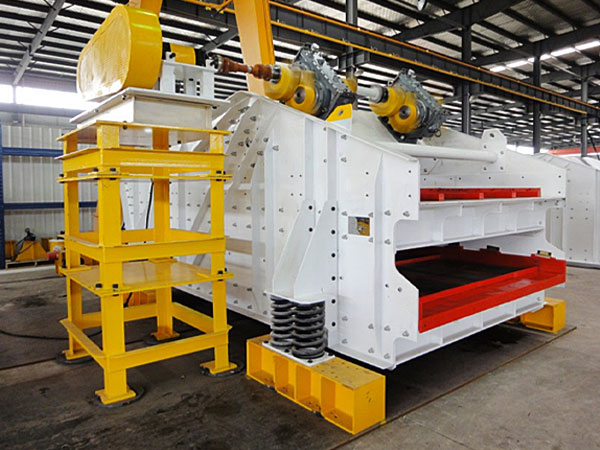
Partnering with an experienced manufacturer simplifies procurement. Haiside offers a comprehensive solution that integrates both dust enclosures and safety guards into a single, customizable package.
- Custom engineering – Each enclosure/guard is designed based on your screen model (e.g., banana, horizontal, inclined) and site conditions.
- Material selection expertise – Recommendation for mild steel, stainless steel, or lined options based on material abrasiveness and moisture.
- Integrated safety interlock systems – Compatible with your existing lockout/tagout procedure.
- Fast delivery and field support – In‑house production capacity ensures lead times of 4–6 weeks for standard sizes.
- Compliance documentation – CE and/or ISO 9001 certification, with full risk assessment report included.
By consolidating design and fabrication, Haiside eliminates interface issues between enclosure and guard, reducing installation errors.
Frequently Asked Questions
Q: How do I know if my vibrating screen needs a dust enclosure or just safety guards?
A: If your material generates visible dust during operation, or you face emission regulations, an enclosure is necessary. Safety guards are mandatory wherever moving parts are accessible. Many operations benefit from both.
Q: Can existing screens be retrofitted with enclosures and guards?
A: Yes. Haiside frequently provides retrofit kits that include site‑measured brackets and adapters. Retrofitting is often more economical than replacing the entire screen.
Q: What maintenance is required for dust enclosures?
A: Periodic inspection of seals, hinges, and flexible connectors. Replace worn rubber strips every 12–18 months depending on dust abrasiveness. Check that access doors close properly to maintain negative pressure.
Conclusion

Selecting effective dust enclosures and safety guards for vibrating screens demands a thorough understanding of operational conditions, regulatory requirements, and material behavior. By evaluating enclosure materials, sealing performance, guard types, and compliance standards, you can protect both personnel and equipment. Haiside provides tailored solutions backed by engineering expertise and a commitment to safety. Contact Haiside to discuss your specific screen configuration and receive a proposal that meets your exact needs.