
Multideck Vibrating Screens: Benefits for Separating Multiple Sizes
Multideck vibrating screens are engineered to simultaneously separate bulk materials into multiple particle size fractions, offering a significant efficiency advantage over single-deck configurations. For operators in mining, aggregates, recycling, and industrial processing, the ability to produce several product grades from a single machine reduces capital expenditure and floor space requirements. This article examines the core design principles, operational benefits, and application-specific advantages of multideck screens, with a focus on how Haiside’s robust engineering maximizes separation accuracy and throughput.
How Multideck Vibrating Screens Achieve Multi-Size Separation
A multideck vibrating screen typically consists of two, three, or four screen decks stacked vertically within a single vibrating frame. Each deck has a different mesh aperture, with the coarsest mesh on the top and progressively finer meshes below. Material enters the top deck, where vibration causes stratification: larger particles remain on top and are discharged as oversize, while smaller particles pass through to the next deck. This cascading action continues through each deck, producing up to four distinct size fractions (plus an undersize) in one pass.
Vibration Mechanism and Material Flow
The vibrating motion—typically circular, elliptical, or linear—is generated by one or two unbalanced motors or eccentric shafts. The amplitude, frequency, and angle of vibration are carefully tuned to maximize particle-bed fluidization and prevent blinding or pegging. Haiside screens feature adjustable vibration parameters, allowing operators to optimize performance for materials with varying moisture content, density, and particle shape.
Key Benefits of Multideck Screens for Multiple Size Separation
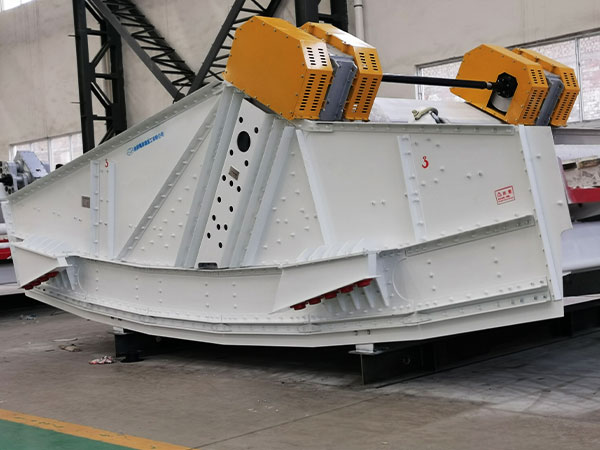
Compared to using multiple single-deck screens in series, a single multideck unit delivers several quantifiable advantages:
- Reduced footprint and installation cost: One multideck machine replaces two to four single-deck screens, saving up to 50% of floor space and associated structural support.
- Lower energy consumption: A single vibrating drive system powers all decks, reducing total power draw compared to multiple separate screens.
- Higher overall throughput: Material is processed continuously across decks, with no need for intermediate conveyors or transfer points, minimizing bottlenecks and downtime.
- Improved product quality: Sequential screening ensures each size fraction meets strict specifications, as overlarge particles cannot bypass fine decks. Haiside screens incorporate anti-blinding technologies such as ball trays and flexible rubber mats to maintain open area.
- Simplified maintenance: Fewer bearings, belts, and motors mean less wear parts inventory and quicker service intervals. Haiside’s modular deck design allows rapid screen mesh changes without removing the entire cassette.
Critical Design Considerations for Reliable Operation
While multideck screens offer clear benefits, their performance depends on proper engineering. Key design parameters include:
- Deck inclination: Steeper angles increase throughput but reduce accuracy; typical incline ranges from 15° to 25°. Haiside offers adjustable inclined models for flexible operation.
- Mesh material and tensioning: Woven wire, polyurethane, or perforated plate options suit different abrasion levels. Proper tension prevents sagging that causes premature wear and inaccurate sizing.
- Vibration isolation and structural integrity: Heavy-duty steel frames with rubber or spring mounts minimize transmitted vibration to the building or supporting structure.
- Feed distribution: An even, well-dispersed feed is critical to avoid overloading one side of the top deck. Haiside integrates custom feed boxes and chute geometries to ensure uniform distribution.
Applications Across Key Industries
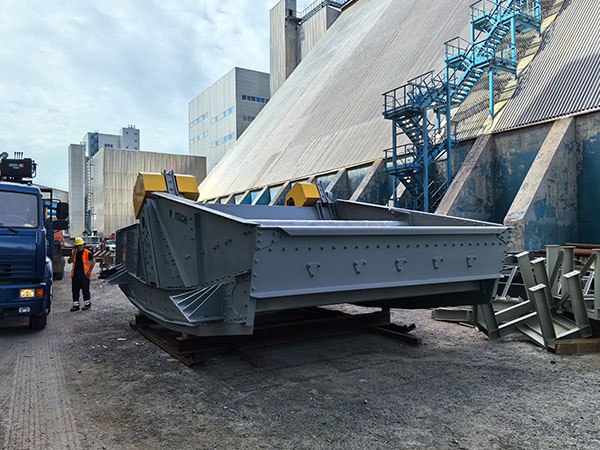
Multideck vibrating screens are widely deployed in:
- Aggregates and sand & gravel: Producing multiple product grades (e.g., 1/4”, 3/8”, 1/2”) from pit-run material, often paired with washing systems.
- Mining and mineral processing: Classifying crushed ore before further comminution or separation processes. Three- and four-deck screens are common in iron ore, coal, and copper operations.
- Recycling: Sorting construction and demolition debris, crushed concrete, or shredded scrap metal into usable fractions for resale or further processing.
- Industrial powders: Fine screening of chemicals, fertilizers, or plastic pellets where precise particle size distribution is required.
Why Haiside Screens Are a Trusted Choice
Haiside has over a decade of experience designing and manufacturing multideck vibrating screens that withstand the harshest operating conditions. Our engineers apply finite element analysis to optimize screen box strength while minimizing weight. Every unit undergoes rigorous testing for vibration uniformity and noise levels before shipment. Haiside also provides customized solutions—such as dust covers, wear liners, and variable-frequency drive controllers—to match specific site requirements. With a global network of service representatives and readily available spare parts, Haiside ensures minimal downtime and maximum return on investment.
Conclusion: Multideck Efficiency for Modern Separation
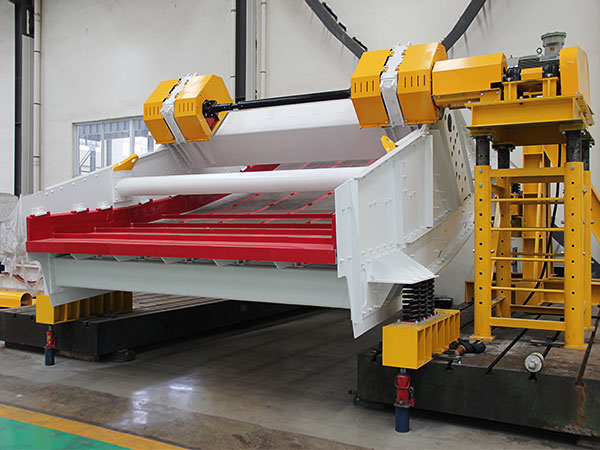
Adopting a multideck vibrating screen is a proven strategy to boost classification accuracy, reduce equipment footprint, and lower operating costs. Whether you are expanding an existing plant or designing a new process line, careful selection of deck configuration, vibration parameters, and screen media will directly impact profitability. Partnering with an experienced manufacturer like Haiside ensures you receive a screen engineered for your specific material and throughput targets—delivering consistent, reliable multi-size separation for years to come.