
The Role of Vibrating Screens in Cement Production Quality Control
In cement manufacturing, consistent product quality is a non-negotiable requirement. Among the many process control tools, vibrating screens play an often-underestimated yet indispensable role in ensuring that raw materials, intermediate products, and final cement meet strict particle size specifications. A well-designed vibrating screen not only improves production efficiency but also directly impacts the uniformity of the finished product, reducing the risk of downstream defects. For plant managers and quality engineers exploring screening solutions, understanding how these machines contribute to quality control is the first step toward making an informed investment. This article examines the critical functions of vibrating screens in cement production, outlines the key parameters that influence screening performance, and presents the advantages of Haiside vibrating screens for achieving consistent quality outcomes.
Fundamental Role of Vibrating Screens in Cement Production
Vibrating screens are mechanical devices that separate bulk materials by particle size through vibration-induced stratification and passage. In cement production, they are deployed at multiple stages: from raw material crushing (limestone, clay, gypsum) to clinker cooling and final product finishing. Their primary quality control contributions include:
- Consistent Raw Material Feed – By ensuring that raw materials entering the mill are within a specific size range, vibrating screens prevent oversized particles from damaging grinding equipment and maintain a uniform particle size distribution for optimal chemical reactions.
- Intermediate Product Classification – After preheating and calcination, clinker must be cooled and screened to remove undersized or oversized fractions that could affect grinding efficiency. This step directly influences the Blaine fineness and compressive strength of the final cement.
- Final Product Homogeneity – In the finishing mill circuit, vibrating screens classify the ground cement to achieve the desired particle size (typically <45 µm for Portland cement). Accurate screening ensures that the cement meets the required specific surface area and avoids quality rejects.
Each of these applications demands a screen that can handle high throughput, resist blinding (clogging), and deliver precise cut points under dusty, abrasive conditions. Without effective screening, variability in particle size leads to inconsistent setting times, reduced strength, and increased customer complaints.
How Vibrating Screen Design Affect Quality Control Performance
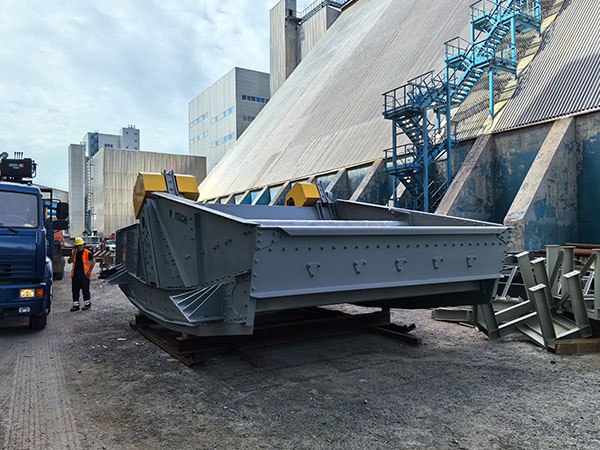
Not all vibrating screens are equally effective in cement quality control. Several design and operational parameters determine whether a screen can maintain the required separation accuracy over time:
Vibration Mechanism and Amplitude Control
The vibration pattern (linear, circular, or elliptical) and amplitude directly affect material movement and stratification. For cement applications, linear motion screens are often preferred because they provide uniform acceleration across the entire deck, reducing the risk of particle segregation. Adjustable amplitude allows operators to fine-tune the screen for different materials without changing the eccentric mass. Haiside vibrating screens feature a robust eccentric shaft drive system that delivers consistent vibration energy even under varying feed loads, ensuring stable cut points.
Screen Media Selection
The type of screen deck – woven wire mesh, polyurethane panels, or rubber sheets – influences both durability and screening efficiency. In cement plants, wear and corrosion from moisture and fine particles accelerate media degradation. High‑tensile steel wire or polyurethane modular panels offer longer service life and resistance to blinding. Haiside offers a range of abrasion‑resistant screen media specifically engineered for cement environments, with open areas optimized to maximize throughput without compromising accuracy.
Anti‑Blinding Features
Blinding – when particles wedge into apertures or adhere to the screen surface – is a major cause of quality deviation. Vibrating screens for cement must incorporate features such as ball decks, ultrasonic vibrations, or trapezoidal wire to keep apertures clear. Haiside integrates an advanced self‑cleaning system that utilizes adjustable ball tray support to reduce blinding by up to 40% compared to conventional designs, maintaining consistent screening efficiency even with high‑moisture materials.
Key Factors in Choosing a Vibrating Screen for Cement Quality Control
When evaluating vibrating screen suppliers for a cement quality control application, decision‑makers should compare performance attributes that directly affect product consistency. The following table summarizes critical selection criteria and how Haiside screens address them:
Comparison of Screening Solutions for Cement Quality
- Cut‑point accuracy: Standard screens may deviate ±2–3% from nominal aperture; Haiside screens achieve ±1% precision through precision‑manufactured decks and rigid frame construction.
- Throughput capacity: Many screens lose separation efficiency at high loads. Haiside’s optimized vibration angle and adjustable stroke angle allow capacities up to 200 t/h on a single deck without sacrificing cut accuracy.
- Durability in abrasive conditions: Haiside uses hardened steel side plates and replaceable wear liners in contact zones, extending service intervals by 30–50% compared to industry averages.
- Ease of maintenance: Quick‑release deck panels and centralized lubrication points reduce downtime. Haiside screens are designed for fast media replacement – typically under 30 minutes per deck.
- Automation & control integration: Haiside offers optional vibration frequency converters and real‑time amplitude monitoring, enabling automatic adjustments to maintain consistent separation despite feed variations.
Cement quality managers should also consider the supplier’s experience in the industry. Haiside has been supplying vibrating screens to cement plants for over 15 years, with a track record of helping clients achieve tighter quality specifications and lower rejection rates.
Conclusion
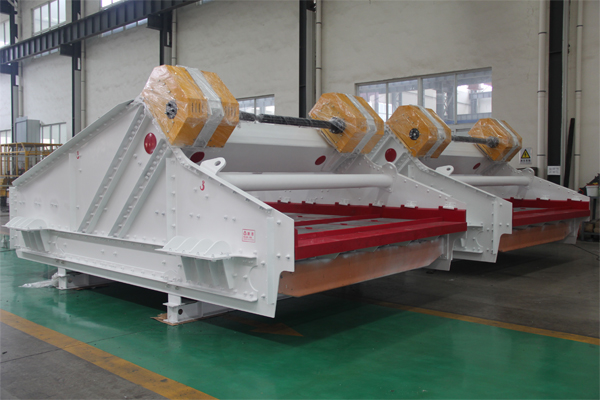
Vibrating screens are not auxiliary equipment but critical quality control components in cement production. From ensuring consistent raw material feed to achieving the precise fineness of finished cement, their performance directly impacts product uniformity, plant efficiency, and customer satisfaction. By selecting a screen with robust vibration control, anti‑blinding features, and durable construction – such as those offered by Haiside – cement manufacturers can reduce variability and maintain compliance with international standards. For organizations seeking to optimize their quality control process, a thorough evaluation of screening technology is an investment that pays dividends through lower rejects and higher operational reliability.